
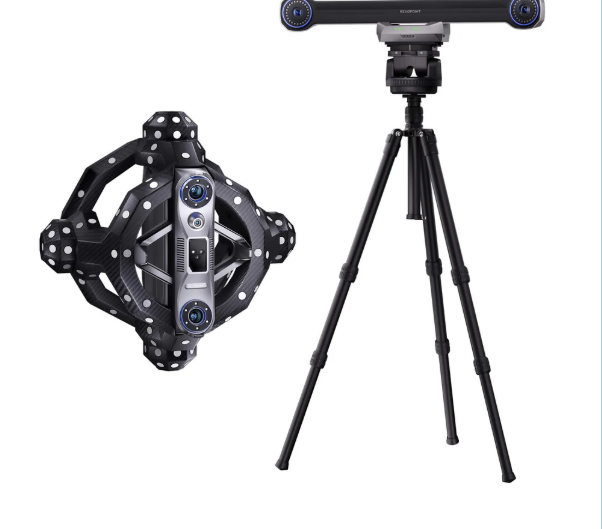
In 2026, creativity and technology are more connected than ever. Designers, engineers, and hobbyists are no longer limited by traditional tools when turning ideas into real objects. One of the biggest reasons for this shift is the rise of the 3d printer scanner, a tool that allows creators to move quickly from physical objects to digital designs.
Instead of spending hours building models from scratch, users can now scan real-world items and convert them into accurate 3D files. This not only saves time but also improves precision, making the entire design-to-print process smoother and more efficient.
What Is a 3D Printer Scanner?
A 3D printer scanner is a device that captures the shape, size, and surface details of an object and converts them into a digital 3D model. It works by collecting thousands of data points across the object’s surface and combining them into a complete digital mesh.
Once the scan is complete, the model can be edited, refined, and exported for 3D printing or further design work. This makes it easier for creators to reproduce, customize, or improve objects without starting from zero.
Compared to traditional measurement methods, scanning provides a more complete and accurate representation of an object’s geometry.
The Scan-to-Print Workflow
The process of turning a physical object into a printed model follows a simple but powerful workflow:
- Scan the Object: Use a scanner to capture the object from multiple angles.
- Process the Data: Software merges the captured data into a clean and complete 3D model.
- Refine the Design: Adjust the model, fix errors, or customize features as needed.
- Print the Object: Export the file and send it to a 3D printer.
This streamlined workflow allows creators to focus on improving their designs instead of spending time on manual modeling.
Why Every Creator Needs This Technology
A 3d printer scanner is no longer just a professional tool—it has become essential for anyone working with 3D printing.
For hobbyists, it opens the door to endless creativity. Everyday objects can be scanned and turned into unique designs or personalized products.
For designers and engineers, it speeds up development and improves accuracy. Prototypes can be scanned, modified, and reprinted quickly, allowing for faster iteration and better results.
For educators, it provides a hands-on way to teach digital design by connecting real-world objects with digital workflows.
In all cases, scanning technology reduces effort while increasing creative possibilities.
Improving Design and Prototyping
Design and prototyping have been transformed by scanning technology. Instead of recreating shapes manually, creators can scan physical models and use them as a starting point.
This approach makes it easier to experiment with new ideas. Designers can quickly test variations, refine details, and improve functionality without starting over each time.
The ability to move from scan to print in a short time frame allows for rapid iteration, which is essential in modern product development.
Reverse Engineering Made Easy
Reverse engineering is another major benefit of scanning technology. Sometimes, original design files are missing or unavailable. In such cases, recreating parts manually can be difficult and time-consuming.
With a 3d scanner for 3d printer, users can scan an existing object and generate a digital model that can be edited or reproduced.
This is especially useful for:
- Replacing damaged parts
- Updating older designs
- Customizing existing products
- Repairing equipment without original blueprints
By simplifying reverse engineering, scanning technology saves time and ensures accurate results.
Revopoint: Empowering Creators with Advanced Scanning
Revopoint are making advanced scanning tools accessible to a wide audience. At Revopoint, creators can explore a range of portable and high-performance scanners designed for different needs.
Revopoint scanners are known for their balance of precision and usability. Many models are lightweight and handheld, making them ideal for both beginners and professionals.
Some key features include:
- High-resolution scanning for capturing fine details
- Real-time tracking for smooth and accurate scanning
- Portable designs for use in studios, workshops, or on-site locations
- Compatibility with popular CAD and 3D printing software
These features make Revopoint scanners a reliable choice for anyone looking to improve their scan-to-print workflow.
Practical Applications Across Fields
The use of 3D printer scanners extends across many industries and creative fields. Designers use them to refine product concepts, engineers rely on them for accurate measurements, and artists use them to digitize their work.
In education, students can scan real-world objects and learn how to transform them into digital models. In manufacturing, scanning helps ensure quality control and efficient production.
This versatility shows how scanning technology is becoming a key part of modern workflows.
Tips for Better Scanning Results
To get the best results when using a 3D scanner, a few simple practices can help:
- Ensure proper lighting to improve scan quality
- Keep the object stable during scanning
- Capture the object from multiple angles
- Use software tools to clean and refine the model
Following these steps ensures that the final digital model is accurate and ready for printing.
Final Thoughts
In 2026, the connection between physical objects and digital design is stronger than ever. A powerful 3d printer scanner allows creators to capture real-world objects, refine them digitally, and produce accurate 3D prints with ease.
With tools like a 3d scanner for 3d printer, the process of design, prototyping, and production becomes faster, more precise, and more creative.
Thanks to innovative solutions from companies like Revopoint, this technology is now accessible to everyone—from hobbyists to professionals—making it an essential part of modern creation and manufacturing.